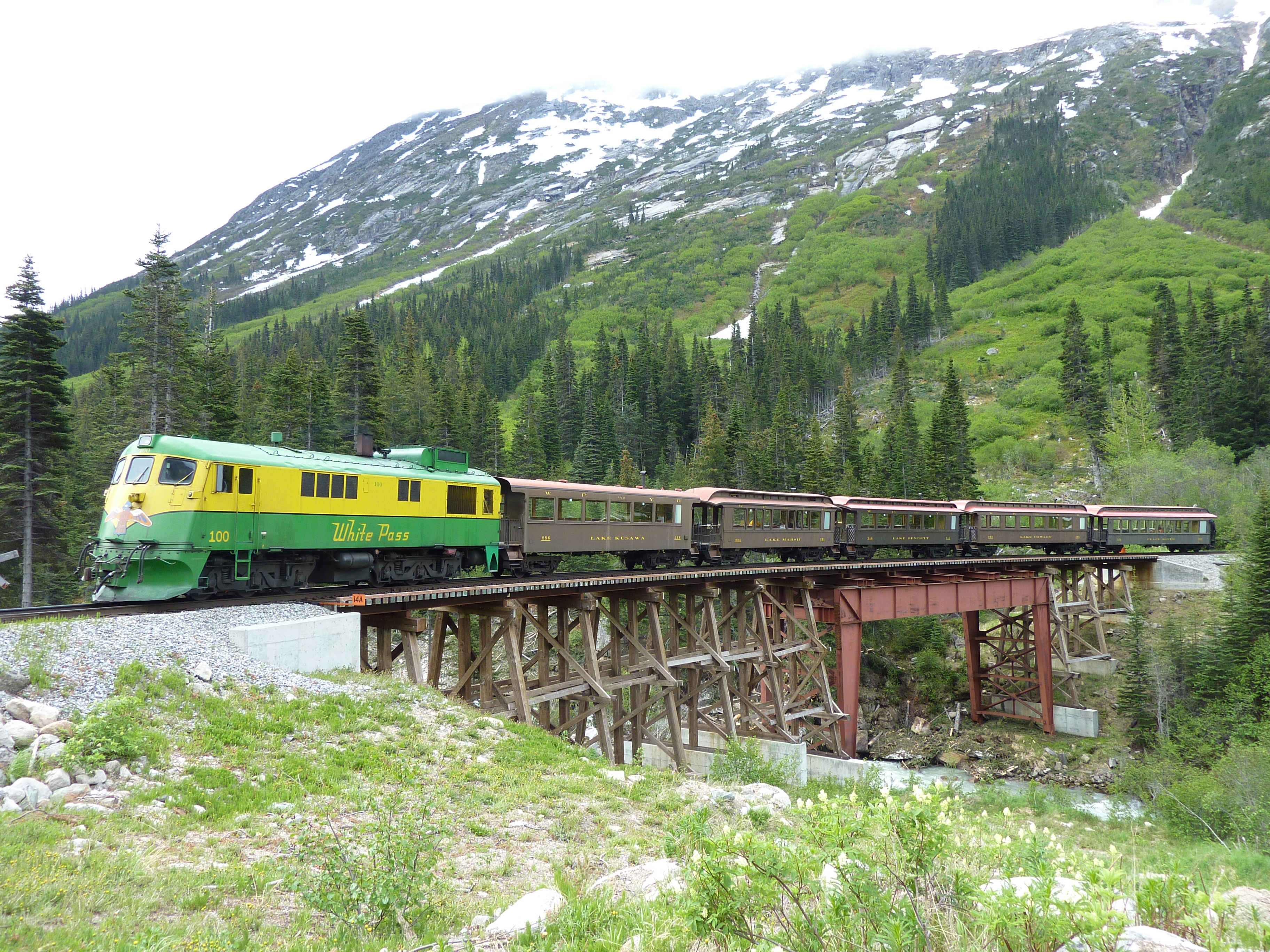
Imagine climbing nearly 3,000 feet above sea level in just 20 miles, clinging to the edge of a granite mountain with nothing but blue sky and a river valley far below. That’s the White Pass & Yukon Route, and it’s one of those travel experiences that genuinely stops you mid-breath.
If you’re sailing to Alaska on a cruise, Skagway is almost certainly on your itinerary. And while the little gold rush town has plenty to offer on its own, the White Pass Railroad is the crown jewel. It’s the kind of excursion people talk about for years. I’ve seen it move seasoned travelers to tears, and I completely understand why.
Let me tell you everything you need to know about the White Pass & Yukon Route: its wild history, what the train ride is actually like, and how to choose the right excursion for your time in Skagway.
HISTORY
The Gold Rush, the Pass, and a Railroad Born of Desperation
The story starts on July 17, 1897, when the Seattle Post-Intelligencer ran a headline that changed everything: Gold! Gold! Gold! Word had gotten out about a massive gold discovery in the Klondike region of Canada’s Yukon Territory, and almost overnight, tens of thousands of people dropped what they were doing and headed north.
The fastest route to the gold fields ran straight through Skagway, Alaska, a scrappy little port town at the northern tip of the Inside Passage. Beginning in 1897, Skagway and the nearby Dyea Valley were the starting points for more than 40,000 gold-rush stampeders who headed to the Yukon primarily via the Chilkoot Trail during the Klondike Gold Rush. It was chaotic, dangerous, and completely unprepared for what was about to hit it.
White Pass itself got its name decades earlier. Captain William Moore, a visionary sea captain who actually founded Skagway, had blazed a trail up into the mountains in the 1880s and named the route after Canada’s Minister of the Interior, Sir Thomas White. Moore even predicted a railroad would come through one day. He was right.
“Give me enough dynamite and snoose, and I’ll build you a railroad to hell.” Michael J. Heney, Railroad Contractor, 1898
The problem was simple: prospectors were not allowed across into Canada by Canadian authorities unless they had sufficient gear for the winter, typically one ton of supplies, which usually required several trips across the passes. Pack horses were dying by the thousands on the White Pass Trail (Dead Horse Gulch didn’t get its name by accident), and the Chilkoot Trail was brutal beyond description. Someone needed to build a better way in.
In April 1898, three separate railroad ventures merged into one, British financing met Canadian engineering, and construction began on what would become one of the most audacious engineering projects ever attempted in North America.
ENGINEERING MARVEL
127,000 Tons of Rock, 450 Tons of Dynamite, and 27 Months
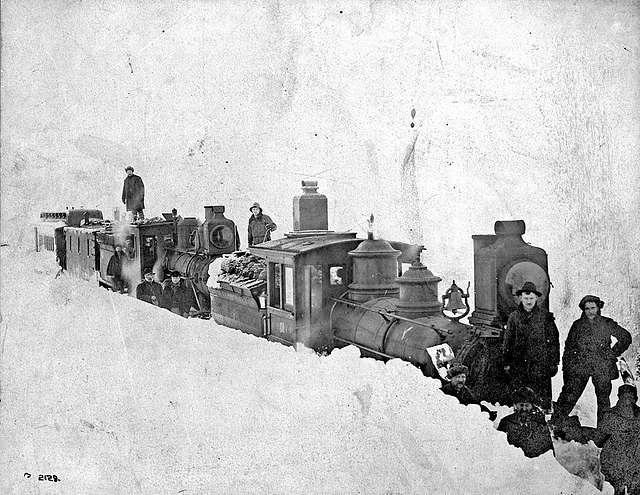
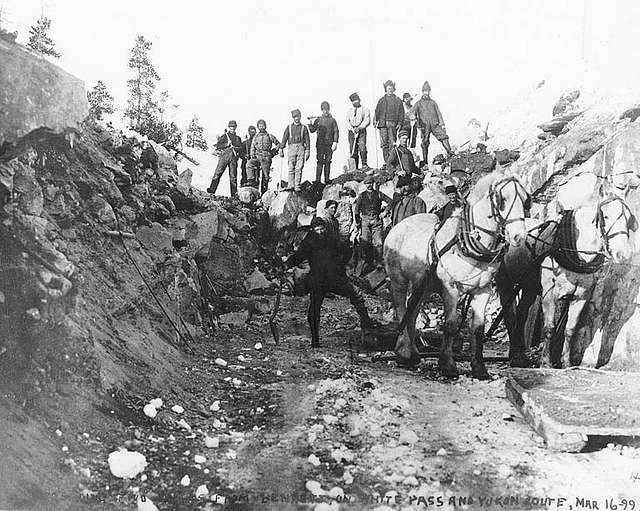
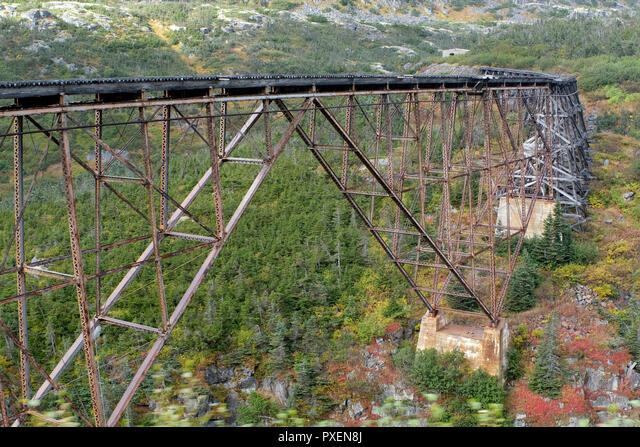
Completed in 27 months using only hand tools, black powder, and regional timber, the White Pass & Yukon Route rises almost 2,900 feet from sea level at the port of Skagway to the White Pass summit on the U.S.-Canada border in just 20 miles. There were no bulldozers. No heavy machinery. Just tens of thousands of workers, sheer will, and an awful lot of explosives.

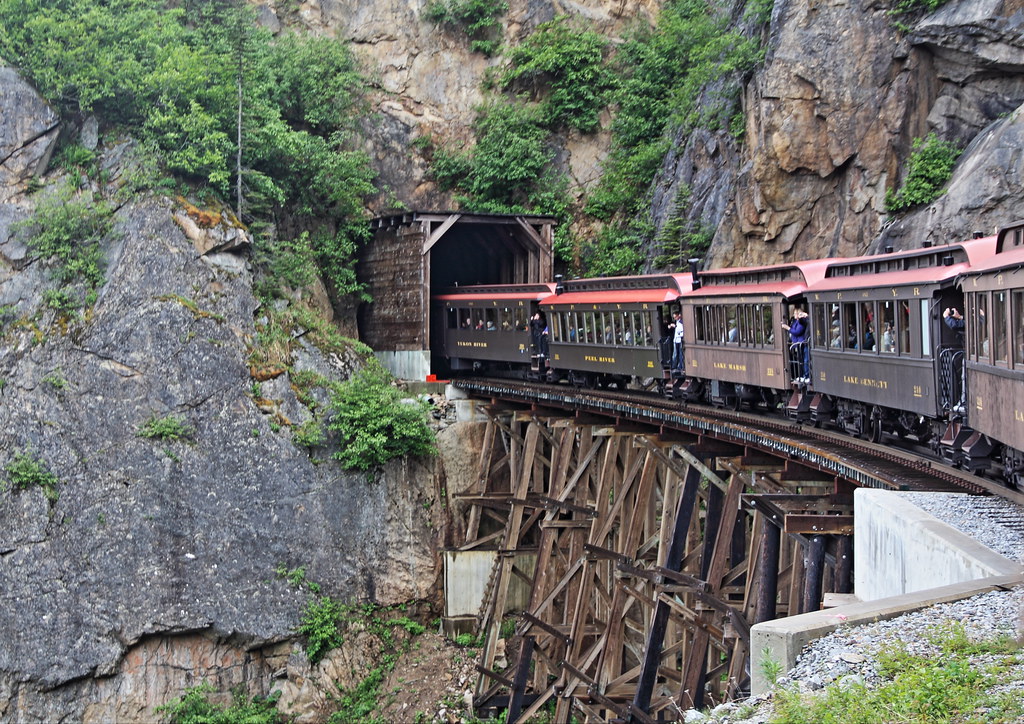
Construction required cliff-hanging turns of 16 degrees, two tunnels, and numerous bridges and trestles. Work on the tunnel at Mile 16 took place in the dead of winter; they battled heavy snow and temperatures as low as 60 below zero, which slowed the work considerably.
The cost per mile was staggering for the era. For the first 20 miles out of Skagway, construction costs averaged $100,000 per mile, and at Porcupine Point, a charge of 2,500 pounds of dynamite was detonated to blast a huge slice of mountainside into the Skagway River below.
They also had to deal with Soapy Smith. The infamous crime boss controlled Skagway at the time and wasn’t exactly thrilled about a railroad "cleaning up" his town. The company president, Samuel H. Graves, was elected chairman of the vigilante organization trying to expel Soapy and his gang. On the evening of July 8, 1898, Soapy Smith was killed in a shootout, and the railroad helped block off the gang’s escape routes, aiding in their capture. Drama does not begin to cover it.
The railway was completed in 1900, commemorated with a ceremonial Golden Spike driven in Carcross, Yukon. Today, this engineering achievement is recognized as anInternational Historic Civil Engineering Landmark, right alongside the Eiffel Tower, the Statue of Liberty, and the Panama Canal.
During World War II, the railway's essential role was transporting laborers and materials to build the 1,520-mile Alaska Highway, considered an essential transportation link for troops and equipment during the war. After the war, it kept running, hauling ore, freight, and passengers, until 1982, when plummeting metal prices shut it down. Then, in 1988, it came back to life as the heritage railway it is today.
THE GATEWAY TOWN
Skagway: Small Town, Big History
You can’t talk about the White Pass without talking about Skagway. This tiny town (population around 1,000 year-round) welcomes over one million visitors per year, the vast majority arriving by cruise ship for a day in port. And yes, it shows. But somehow, Skagway manages to hold onto its authenticity in a way that genuinely surprises people.
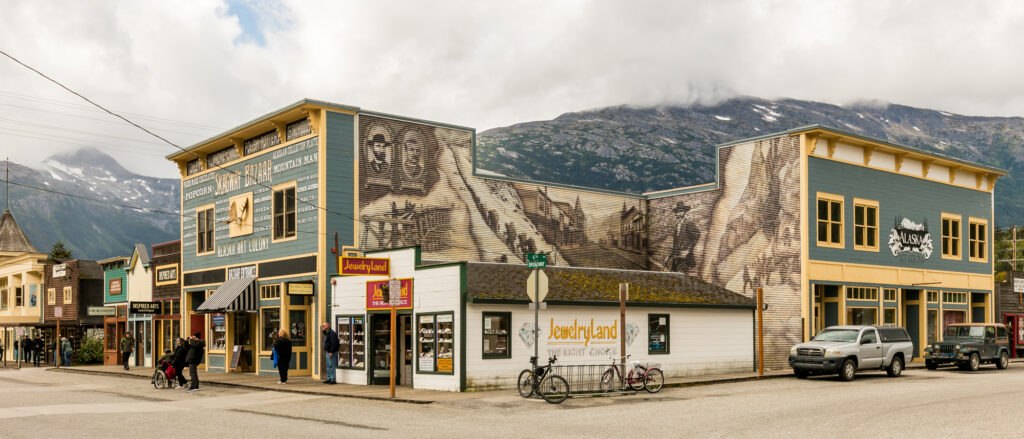
Visitors are transported back in time to the gold rush days along the seven-block corridor on Broadway that features historic false-front shops and restaurants, wooden sidewalks, locals in period costumes, and restored buildings, many of which are part of the Klondike Gold Rush National Historical Park.
Klondike Gold Rush National Historical Park
Authorized in 1976 and housed in a 1898 railroad depot, the park’s visitor center showcases exhibits that educate visitors about the gold rush that shaped modern-day Skagway. Park Rangers lead Ranger Chats throughout the summer. It’s free, it’s fascinating, and it sets the stage for everything else you’ll see.
The Arctic Brotherhood Hall
Possibly the most photographed building in Alaska, the Arctic Brotherhood Hall’s facade is covered with 8,833 pieces of driftwood that were attached in 1899 and extensively renovated, piece by piece, in 2005. You genuinely can’t miss it.
The Red Onion Saloon
Once a gold rush-era brothel, now a lively bar, restaurant, and museum. Order a local brew, soak up the history, and don’t skip the upstairs museum tour. It’s exactly as memorable as it sounds.
The Days of ‘98 Show
Entertaining audiences for over 100 years, The Days of ‘98 Show is the Inside Passage’s best and longest-running melodrama, a theatrical retelling of Skagway’s wild gold rush days, including the story of Soapy Smith himself.
Pro Tips for Your Day in Skagway
- * The train station is a short walk from the cruise dock. No bus needed.
- * Book your White Pass excursion in advance, especially in peak summer. Spots sell fast.
- * Morning trains offer softer light for photos. Evening trains (Tue–Thu) have fewer passengers.
- * Passports are required for all excursions that cross into Canada. Only the White Pass Summit round-trip stays on the U.S. side.
- * Layers are your best friend. It can be cool and misty even in July.
ALL ABOARD
What the Ride Is Actually Like
Here’s the honest truth: no photo, no description, and no amount of reading really prepares you for this train ride. The scale of the landscape hits differently when you’re on it.
Twelve miles out of Skagway, the train begins a huge horseshoe curve. You’ll see Slippery Rock, a wooden trestle, a tunnel, and the best perspective on the engineering wonder and grit it took to build this section of rail in the dead of the 1898–1899 winter.
You’ll passInspiration Point: look down at Skagway Harbor and the Sawtooth Range, and you’ll understand immediately how it got its name. Then comesDead Horse Gulch, a sobering reminder of how brutal the original trail was for the thousands of pack animals that didn’t survive the rush. Farther along, you’ll see the headwaters of the Yukon River, Bridal Veil Falls, and glaciers that look close enough to touch.
The vintage railcars are authentic and narrow-gauge. They’re not luxury, but they are genuinely historic, and that’s the whole point. You can step onto the open platforms between cars for unobstructed views and better photos, though it does get cold out there. Dress accordingly.
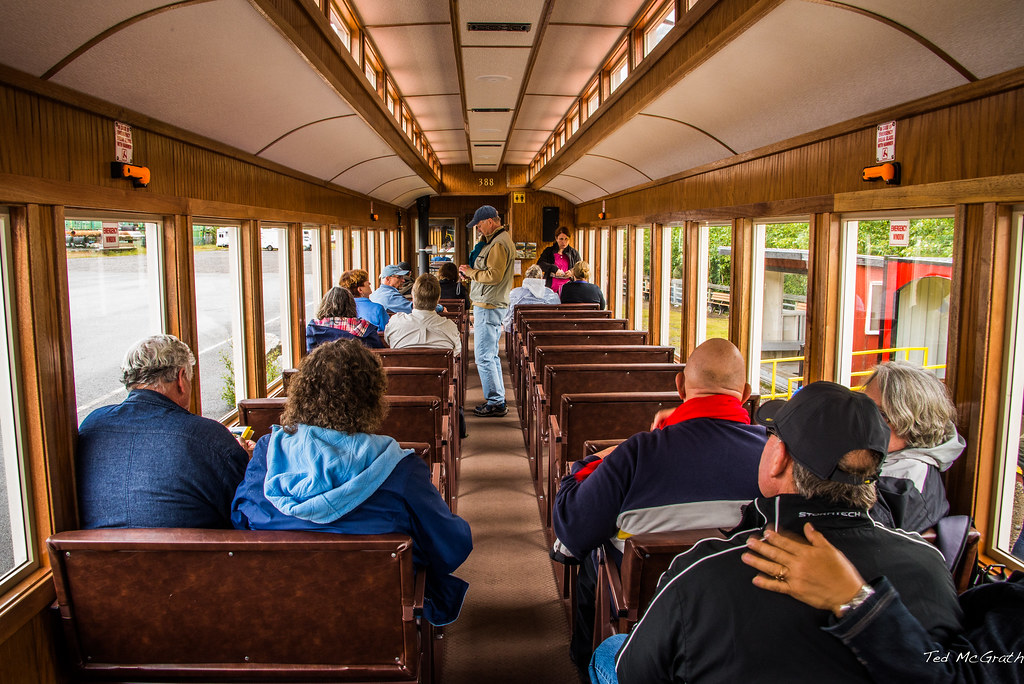
Throughout the journey, narration walks you through the history of the railroad, the gold rush, and the landscape you’re moving through. It’s informative without being dry, exactly what you want when you’re surrounded by scenery this dramatic.
EXCURSIONS & TOURS
Choose Your Adventure: White Pass Tours Worth Booking
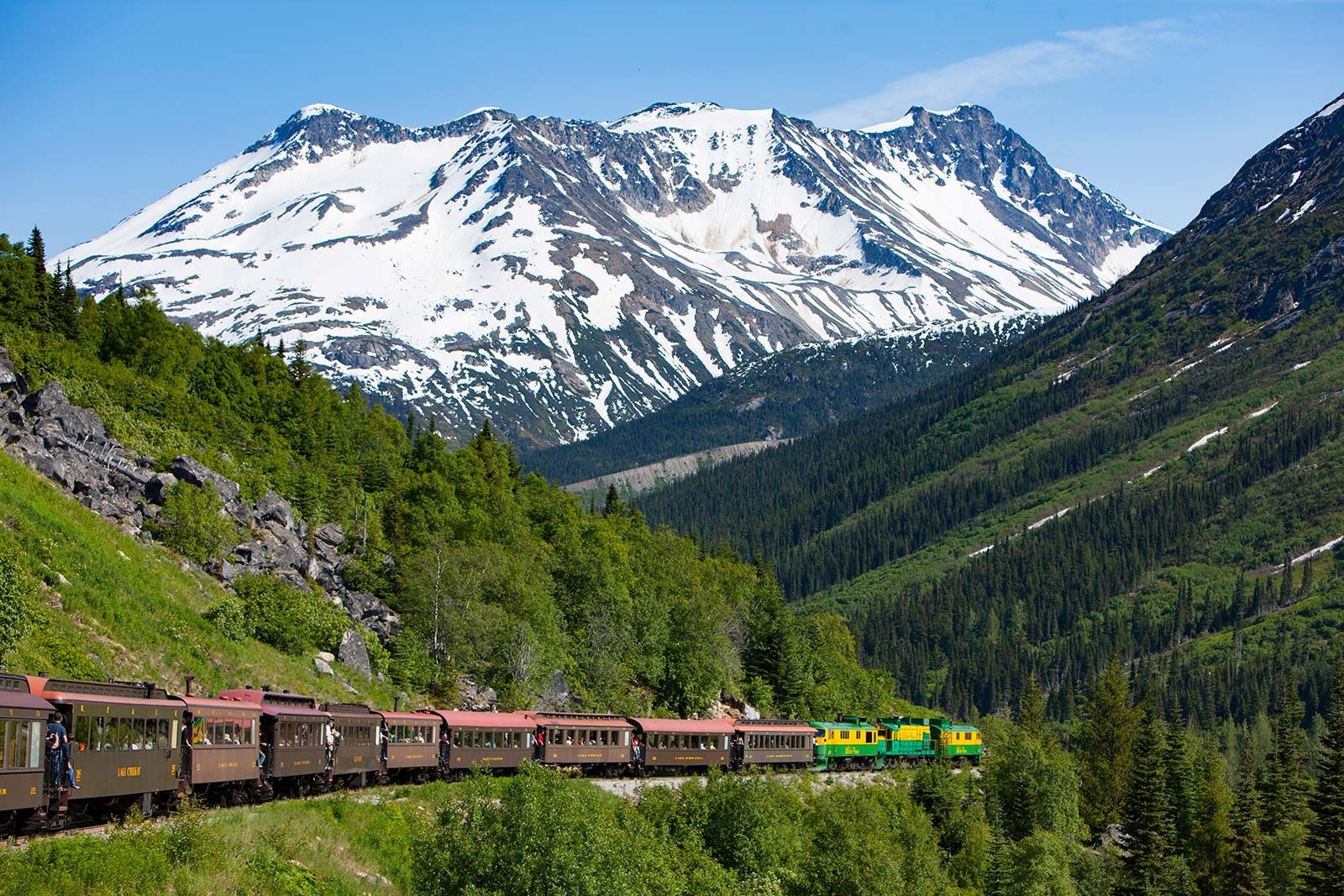
The White Pass & Yukon Route offers several different experiences depending on how much time you have and how deeply you want to go into the history. You can book excursions through your cruise line, or independently (often cheaper). Either way, don’t skip them. For those choosing to book shore excursions independently, there are several excellent vendors. For example, during my trip to Alaska, I booked some of our excursions throughViator. Another highly recommended option isShore Excursions Group. Both companies offer a wide variety of choices. Here’s the breakdown:
White Pass Summit Excursion
MOST POPULAR | ~2.5 TO 3 HOURS | NO PASSPORT REQUIRED
A round-trip from Skagway to the White Pass Summit, passing Bridal Veil Falls, Inspiration Point, and Dead Horse Gulch. This is the go-to for cruise passengers with limited time. It’s fully narrated, genuinely breathtaking, and gets you to 2,888 feet above sea level before looping back to town. Perfect if this is your one shot at the White Pass experience.
Bennett Scenic Journey
FULL DAY | FULL DAY | PASSPORT REQUIRED
A deeper dive into gold rush history, the Bennett Scenic Journey takes you to Bennett, British Columbia, where stampeders once camped before heading to the Klondike. This full-day adventure includes stops at Lake Bennett and the historic Bennett Station, returning to Skagway via motor coach along the scenic Klondike Highway. Box lunch included. This one is for people who want to really feel the history, not just see it.
Lake Bennett Steam Excursion
FULL DAY | PASSPORT REQUIRED
Traveling aboard the restored White Pass Steam Engine #73, passengers are transported back to the golden age of rail travel. Guests have the opportunity to explore the historic Bennett Station House or hike along the Chilkoot Trail. If you love trains for the love of trains, this is your excursion.
Train & Bike Combo
HALF DAY | ACTIVE ADVENTURE
Climb into the coastal mountains aboard the legendary White Pass Railway, then pedal your way downhill from Canada back to Alaska. This unforgettable journey pairs dramatic scenery, gold rush history, and a thrilling summit descent. A perfect option for active travelers who want to earn their views.
Beyond the Train: More Skagway Excursions to Consider
Chilkoot Trail Hike:Hiking the 33-mile Chilkoot Trail is no small feat, but it’s a fascinating journey. So many gold rush artifacts line the route that it’s known as a “very long museum.” You can also do a shorter section if a full trek isn’t in the cards.
Helicopter Glacier Tour + Dog Sledding:Head up to Davidson Glacier on a helicopter ride and spend time exploring the glacier before learning about the sport of dog sledding and watching a musher in action in Skagway’s rugged mountain landscape. Genuinely unforgettable for the right traveler.
The Golden Circle Drive:A 360-mile loop connecting the Alaska Highway and Haines Highway. The route starts and ends in Skagway, passes through Haines, and crosses into Yukon Territory. Best suited for independent travelers or pre/post cruise extensions.
Gold Panning:Several local businesses offer gold panning experiences where you can sift through gravel to find real gold you can keep. Fun for all ages and a hands-on history lesson about the gold rush.
Grizzly Falls Zipline:Based in Dyea, about 11 miles outside of town, this adventure features 11 ziplines. Great for adrenaline seekers in your group.
PLAN YOUR VISIT
What You Need to Know Before You Go
Skagway is a popular stop for cruise ships sailing to Alaska, and the White Pass & Yukon Railroad station is just a short walk from the cruise dock, perfect for travelers seeking a day trip. If you’re not arriving by cruise ship, you can reach Skagway via the Alaska Marine Highway ferry, the Klondike Highway by car, or by small plane air-taxi from Juneau.
Cruise ship passengers can typically book the White Pass excursion directly through their cruise line, with the convenience of boarding dockside. That said, booking independently often gives you more flexibility on timing and tour type, and sometimes a better price. Either way, book early. This excursion sells out.
The White Pass Summit round-trip does not require a passport since you stay on the U.S. side of the border. But every other tour that continues into Canada, including the Bennett Journey and the Steam Excursion, does. Make sure your travel documents are in order before you board. The train is wheelchair accessible on the summit excursion, which includes a lift. For other routes, contact the railroad in advance to confirm accommodations for specific mobility needs.
And finally, bring a camera, but don’t spend the whole ride looking through a lens. There are moments on this train where the scenery deserves your full, undivided attention. The photos will be great. The memory will be better.
Ready to Ride the Scenic Railway?
I’d love to help you plan your Alaska cruise and/or land tour, including making sure you don’t miss a single thing in Skagway.